The European Union has achieved its first goal: lasting peace between Germany and France. Through numerous treaties, the Union has grown into a vast alliance of states doing significant work for free trade, solidarity, and a sustainable future.
However, the EU is in an unsustainable state. Not all member states have kept up with the march of democracy, and in doing so they are holding back the Union’s joint decision-making and development. After the Slovak elections, shared support for Ukraine has also begun to waver further. The Union’s international standing is shaky, since an EU that speaks with many faces fails to convince as a global actor.
The EU must therefore keep developing and put an end to the stagnation that has followed the Treaty of Lisbon. The Union could be developed by reopening the founding treaties, which would, for example, make it possible to abandon the unanimity principle so that sudden changes in individual member states no longer hold back the whole Union’s functioning. The EU’s much-discussed democratic deficit could be fixed through a bicameral structural reform, in which — following the US model — the Commission would serve as the upper chamber and the Parliament as the lower chamber. Elections would choose not only representatives to the Commission and Parliament but also Europe’s head of state, i.e. a president. The presidential election campaign would be run across the whole of Europe, and the visibility of the office would be highlighted in pan-European media. Europe-wide parties, meanwhile, would avoid the conflicts that national parties cause within Parliament, while also helping to create a pan-European public sphere that would enable public political debate on European issues and strengthen the extent to which citizens’ opinions are heard in decision-making.
The current arrangement is also on an unsustainable footing when it comes to the economy, since member states face pressure to respond to free competition by cutting taxes and aligning their economic systems with one another. Yet some member states offer their citizens extensive social security, which rests on a high rate of taxation. In Finland, for example, the debt ceiling set by EMU and the push to bring the tax rate in line with other European countries serve as weighty justifications for the government’s austerity policy. For social security to remain extensive for Europeans, the Union should have its own power of taxation, which would allow it to secure equality for its citizens.
A third reason for developing the Union becomes concrete in foreign policy. The EU has been described as matching the power of the United States and China by growing into a third great power. However, the Union’s foreign policy is not unified, and China, for example, has exploited this by striking separate bilateral agreements with each member state. Eastern member states in particular hold views that diverge from the Union’s line, not only on China but also on Russia, and an internally divided union cannot operate on the global stage as effectively as it is meant to. Before long, Russia too will restore a working relationship with at least some member states, and by then a message of solidarity alone will not get us far.
Without further development, the Union will not be able to keep pace with China, the United States, or Russia. But most importantly, it will not be able to offer its citizens democratic and equal decision-making and economy.
It all starts with leaders’ willingness to develop the Union. As Abbé de Saint-Pierre wrote as early as the 18th century, theorising about perpetual peace in Europe: “Even though man is selfish, he should still have enough understanding to see what is good for him, and enough courage to act for his own well-being”.
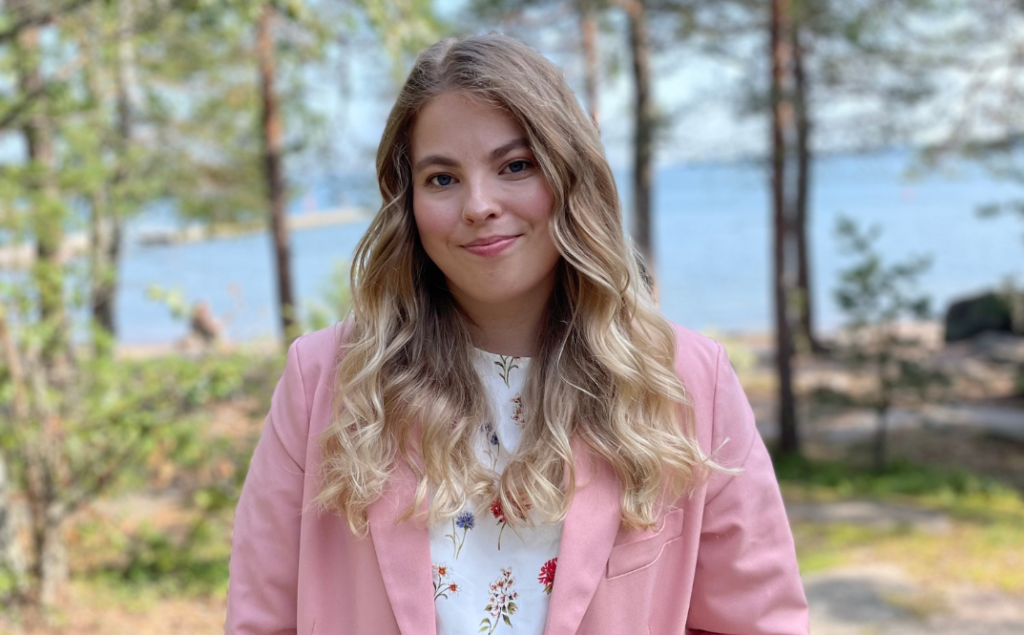
Pieta Päivänen, President
JEF Turku