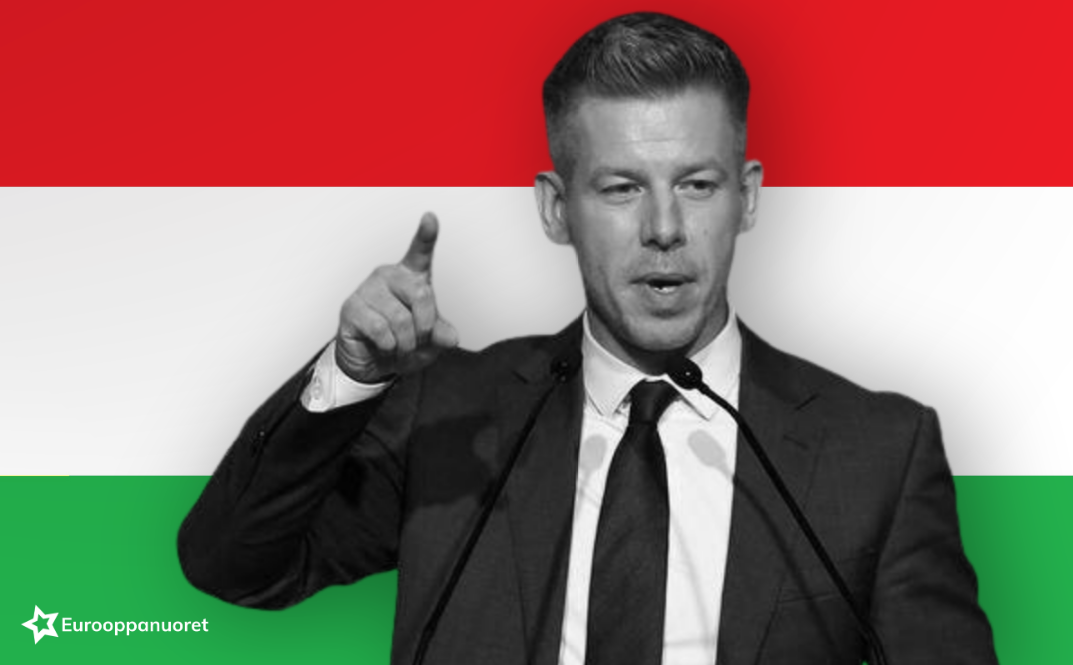
Péter Magyar has been declared the winner of Hungary’s parliamentary elections. This brings to an end Viktor Orbán’s 16-year reign, which has been defined by the erosion of the rule of law in Hungary, the weakening of civil rights, and the blocking of EU development and support for Ukraine.
Although Magyar’s Tisza party has promised to strengthen the rule of law in Hungary, develop cooperation within the Union and break free from dependencies on Russia, the party’s statements have been cautious on matters such as support for Ukraine and its EU membership. JEF Finland demands that the Magyar administration keep its promises of active EU cooperation and support Ukraine in solidarity, like the other countries of the Union. The EU must also be ready to act — for example by suspending Hungary’s voting rights or freezing its EU funding — should the new administration’s promises turn out to be nothing but empty rhetoric.
Europe has long awaited the end of Orbán’s reign, and the April elections have been regarded as a decisive question for Europe’s future. In particular, Magyar’s promises to reduce corruption and strengthen democratic structures have been received with anticipation both in Hungary and at European level. Magyar has indeed stated that he intends to respond swiftly to the Commission’s observations on the problems in the rule of law system, so that Hungary can continue receiving EU funds. The incoming prime minister’s promises to break free from dependencies on Russia, as well as his concern over the growing influence of the Trump administration in Hungary, have also been positive signs of smoother future cooperation within the Union.
It must be remembered, however, that the situation will not automatically improve overnight. Hungary’s political institutions are filled with officials from Orbán’s Fidesz party. Orbán is also able to significantly obstruct decision-making from the opposition.
Although the election result is being celebrated across the Union as a victory for our shared European future, a Magyar administration does not mean automatic relief for Ukraine. The incoming prime minister has promised cooperation with Ukraine, but the Tisza party’s MEPs, for example, voted in the European Parliament against the 90 billion loan the Union planned for Ukraine, and the party does not support fast-tracking Ukraine’s EU membership.
Orbán’s defeat does not remove the fundamental flaw at the heart of the Union’s foreign policy: unanimity decisions. Although the reign of the biggest obstructionist in EU decision-making in recent years has now come to an end, nothing prevents new Orbáns or even more radical leaders from rising to power in national elections. The ability of a single member state to exploit the Union’s structures to pursue its own domestic political goals or to deliberately erode the Union is one of the EU’s greatest future security threats. Orbán will leave the EU a legacy he never would have wanted: the European Council must move to qualified majority voting in foreign and security policy.
Further information:
Pieta Päivänen