
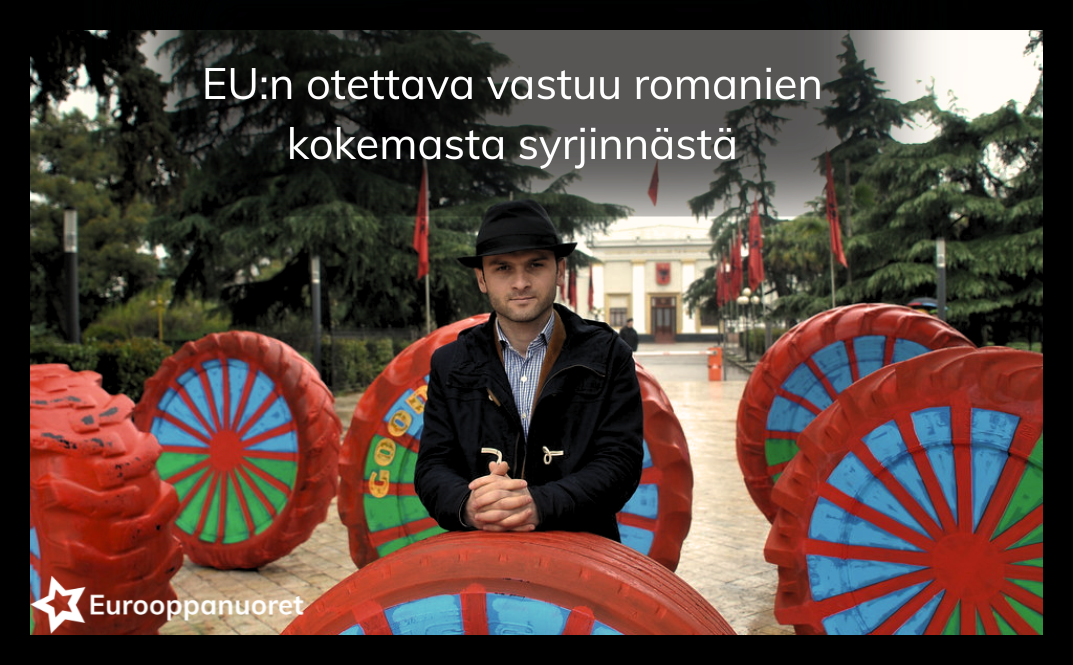
International Roma Day is celebrated on 8 April. On this day, it is right to highlight the position of Europe’s largest ethnic minority and the systematic discrimination that Roma face in many member states. The EU cannot call itself equal, fair and just when millions of its residents are systematically discriminated against.
Discrimination against Roma is not merely a national issue; it concerns the whole of Europe. The fundamental values of the European Union include equality, non-discrimination and the rule of law, yet these values are not realised for Europe’s largest minority group, the Roma. This is a significant injustice that must be corrected. Rooting out discrimination cannot be the responsibility of individual countries alone; the EU must take a more active role in combating antigypsyism across Europe.
In many EU member states, Roma children are placed in special education classes without proper medical or pedagogical grounds, which narrows their educational opportunities and weakens their future prospects. Roma often live in segregated areas lacking adequate basic services, and their employment opportunities are clearly weaker than those of the majority population. In working life, people of Roma background face discrimination both in recruitment and in the workplace, which makes their position in society more difficult. In many countries, Roma are also subjected to hate crimes and arbitrary treatment by the authorities without the justice system intervening with sufficient effectiveness.
Although Roma have been part of European history for centuries, their culture, experiences and position have been sidelined in public debate and in the writing of history. There are 10–12 million Roma living in Europe, yet most Europeans know very little about their history. During the Holocaust, hundreds of thousands of Roma were murdered, but this part of history has remained in the shadows of European memory. At the same time, the significant contribution of Roma to Europe’s cultural heritage – particularly in music, literature and the arts – often goes unrecognised.
Recognising historical discrimination is a precondition for dismantling today’s structural barriers and ensuring the equal participation of Roma in society. Only by confronting the past can we build a future in which every European genuinely has equal opportunities.
The EU must commit to concrete action to defend the rights of Roma. Antigypsyism must be incorporated into the EU’s rule of law monitoring so that discriminatory practices in member states can be addressed systematically. In addition, better EU-level mechanisms are needed to combat discrimination and hate crimes, and the guidelines of the Council of Europe and the EU Agency for Fundamental Rights must be incorporated into member states’ national legislation. The history and culture of the Roma must also be fully recognised as part of European cultural heritage and included in the EU’s education and cultural policy. Roma rights are European rights, and defending them is a duty for us all.
Further information:
Nea Baarman
President