One major topic has been conspicuously absent from the election debate coloring this spring’s parliamentary elections – namely, the European Union. Although the elections’ key themes include balancing public finances, security policy, and rising price levels, the EU has mostly been mentioned only in passing. For a brief moment, the EU took center stage in the election debate when party leaders rushed to condemn a statement by Finns Party chairwoman Riikka Purra, according to which the Finns Party’s long-term goal is to leave the EU. A couple of days after the statement, the discussion once again settled back into a mundane, day-to-day political level.
The EU has also received less attention in election compasses. In Iltalehti’s election compass, the EU was mentioned a grand total of once, in reference to the carbon neutrality target. In Yle’s election compass, the EU was mentioned only once, in a question related to abolishing the availability consideration requirement. Helsingin Sanomat’s election compass did not contain a single direct mention of the EU. This silence on EU policy may in part imply that the European Union has become a kind of given, which is why it doesn’t need to be specifically asked about – even though many of the other questions in these compasses have a significant EU dimension.
The European Union’s influence on Finnish politics should not be underestimated. At the same time as we elect a new parliament for our country, we are also electing a new parliament for a member state of the Union. Rank-and-file members of parliament deal with EU matters daily, at the very least through committee work. Ministers, in turn, represent Finland in the EU Council with the mandate of parliament. The Prime Minister bears the weighty responsibility of leading Finland’s EU policy. In addition, the directives, regulations, and statutes issued by the EU have a significant impact on parliament’s legislative work.
In the coming years, Finland will also need to take a stand on major developments within the Union. Significant steps forward are being taken in key policy areas of the Union, such as energy and economic policy. The return of war to European soil is also forcing the Union to reform itself at an accelerating pace.
Given the above, it seems paradoxical that the EU has so far only appeared in election debates as superficial mentions.
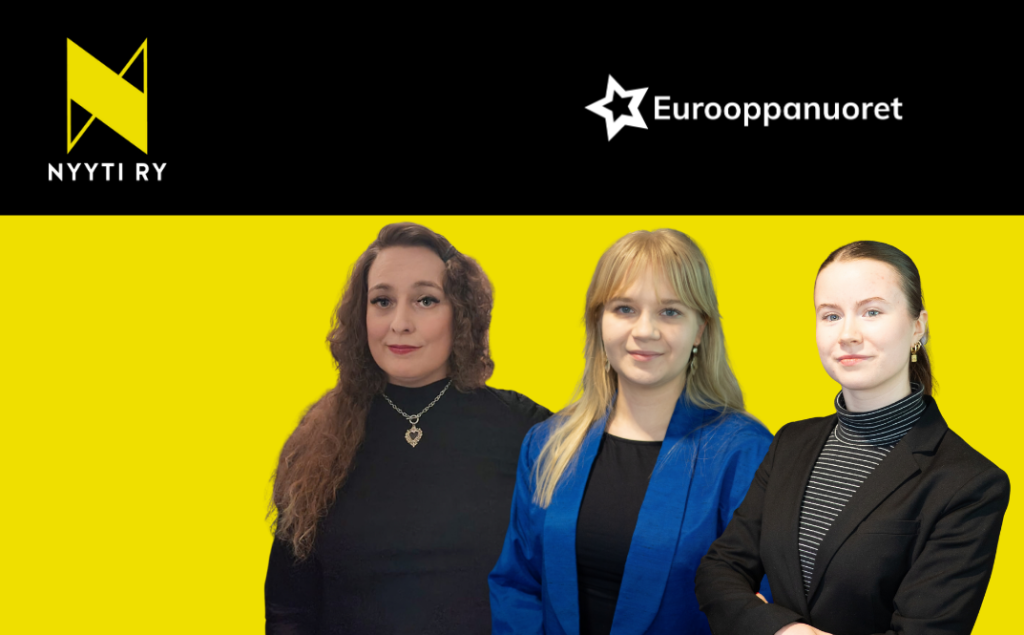
We decided to fill this gaping hole in the election debate by organizing an election panel that focused specifically on EU affairs and other international themes. The panel was held on Monday, March 6, 2023, in the Väinö Linna Hall at Tampere University. The panel was organized in collaboration with the Tampere UN Association. Our panelists were Liban Sheikh (Left Alliance), Iiris Suomela (Greens), Sofia Julin (SDP), Aleksi Sandroos (Centre), Ami Rinta-Valkama (Christian Democrats), and Sebastian Lohja (National Coalition).
The first part of the two-part panel focused on international questions and was conducted entirely in English. This was an attempt to also reach those who do not understand Finnish, but who are nonetheless affected by political decisions.
In the second part, panelists were challenged solely on EU matters. Unanimity was particularly evident regarding the benefits brought by the Union. All panelists saw EU membership as having brought Finland more benefits than drawbacks, although criticism was also directed at the EU, for example regarding domestic agriculture and austerity-focused economic thinking. A positive attitude toward supporting Ukraine also united the candidates. However, Ukraine’s EU membership was largely seen as a distant prospect. The Copenhagen criteria should not be relaxed even for Ukraine’s sake, but alternative ways of supporting Ukraine were widely proposed.
Economic questions ultimately created a rift in otherwise fairly aligned positions. In particular, the EU’s recovery instrument sparked debate, with some warning against joint debt, while others emphasized the importance of pandemic-era stimulus for member states’ economies. The economic perspective also occasionally surfaced when discussing the green transition. Panelists were generally positive about carbon neutrality targets. Some panelists emphasized in their remarks the importance of taking competitiveness and security of supply into account when carrying out reforms.
A summarizing question about the Union’s challenges in the coming years drew a wide range of answers. External challenges were mentioned in particular, such as the situation in Ukraine and the climate crisis, but also internal challenges within the Union, such as the rise of populism and violations of the rule of law.
Through the panel, we managed to bring questions that can easily seem distant closer to voters, especially young people. The panelists also praised the panel’s subject matter, even though some of the questions were found more challenging than usual.
Engaging in political discussion is a value in itself, and following it is also rewarding for voters. Hearing different viewpoints sparked many new thoughts, but one idea was reinforced even further: the parliamentary elections are also about the EU.
Text: Santeri Anttila
The author is TEN’s EU affairs officer and studies political science at Tampere University.